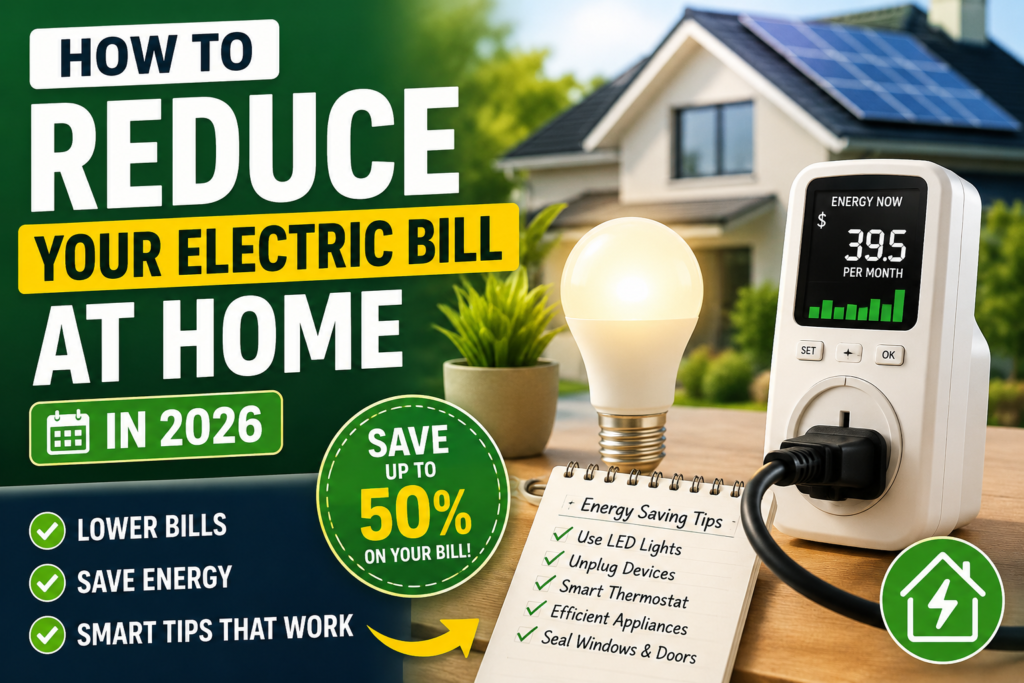
Electricity bills are one of the biggest monthly expenses for many households. With more devices, heating, cooling, appliances, and home office equipment running every day, it is easy for energy costs to increase without noticing.
The good news is that reducing your electric bill does not always require expensive equipment. In many cases, small changes in daily habits, appliance use, insulation, and heating or cooling management can help lower energy waste.
The U.S. Department of Energy explains that some home energy-saving tips are simple, while others require more effort and investment but may lead to savings over time.
Start by Understanding Where Your Electricity Goes
Before trying to reduce your bill, you need to know what consumes the most energy in your home. In many households, heating and cooling are major energy users. ENERGY STAR notes that heating and cooling can account for nearly half of the energy used in a home.
Common electricity users include:
- Air conditioning
- Heating systems
- Water heaters
- Refrigerators
- Washing machines and dryers
- Lighting
- Televisions and computers
- Chargers and standby devices
Once you know where the energy goes, it becomes easier to reduce waste.
Use LED Lighting
One of the easiest ways to reduce electricity use is to replace old bulbs with LED bulbs. LED lighting uses less energy and lasts longer than many traditional bulbs.
Start with the rooms you use most, such as the kitchen, living room, bedroom, bathroom, and office. This small change can reduce lighting costs over time without changing your lifestyle.
Adjust Your Thermostat
Heating and cooling can have a big impact on your bill. Try to avoid extreme thermostat settings. A small adjustment can reduce energy use, especially during summer and winter.
A smart thermostat may also help some households because it can automatically adjust temperatures when you are away or asleep. ENERGY STAR says certified smart thermostats are independently certified based on field data to deliver energy savings.
Unplug Devices You Do Not Use
Many devices continue using electricity even when they are turned off. This is often called standby power.
Examples include:
- Phone chargers
- Game consoles
- TVs
- Printers
- Microwaves
- Audio systems
- Computers
Use power strips to turn off several devices at once. This is a simple habit that can help reduce unnecessary energy use.
Improve Home Insulation
Poor insulation can make your heating and cooling systems work harder. If your home loses heat in winter or lets hot air in during summer, your system may run longer than necessary.
Check:
- Windows
- Doors
- Attic spaces
- Wall gaps
- Air leaks
- Ducts
Sealing leaks and improving insulation can make your home more comfortable and energy-efficient.
Maintain Your Appliances
Old or poorly maintained appliances can consume more electricity. Clean refrigerator coils, replace HVAC filters, and service heating or cooling systems when needed.
A dirty filter can reduce airflow and force your system to work harder. Regular maintenance helps equipment run more efficiently and may extend its life.
Consider Alternative Energy Guides Carefully
Many people also search for digital guides and DIY systems that claim to help reduce electricity bills. Some guides may be educational, but you should always keep realistic expectations.
Before buying any online energy-saving guide, read a balanced review first. We created a full Energy Revolution System Review to explain what this digital guide is, what buyers should know, and whether it is realistic for people looking to reduce electricity costs.
Final Thoughts
Reducing your electric bill is possible, but it usually comes from a combination of smart habits, efficient equipment, and realistic planning. Start with simple changes first: LED bulbs, thermostat adjustments, unplugging unused devices, and regular appliance maintenance.
If you later explore alternative energy systems or digital guides, research carefully and avoid unrealistic promises. The safest approach is to save energy step by step while protecting your home and budget.
Related Energy-Saving Articles
- Learn practical methods in our guide on how to reduce your electric bill at home .
- Discover simple energy-saving tips for homeowners that can help reduce monthly utility costs.
- New to alternative energy? Read our beginner guide to DIY home energy systems before starting.
- Compare solar panels vs DIY energy guides to understand which option may fit your home better.
- Protect yourself by learning how to avoid electricity-saving scams online .