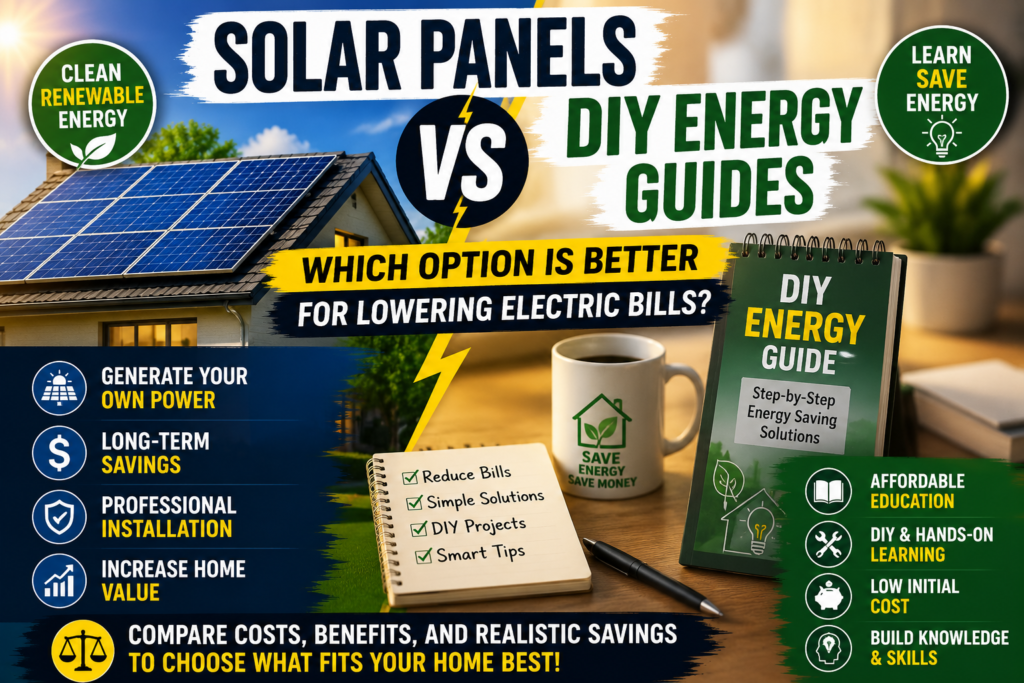
Many homeowners want to lower electricity bills, but they are not sure where to start. Two common options are solar panels and DIY energy guides.
Solar panels are physical systems that generate electricity from sunlight. DIY energy guides are usually digital products that teach energy-saving ideas, alternative energy concepts, or home efficiency methods.
Both options can be interesting, but they are very different.
What Are Solar Panels?
Solar panels convert sunlight into electricity. A home solar system usually includes panels, an inverter, mounting equipment, wiring, and sometimes batteries.
Solar can help reduce dependence on the grid, but it usually requires a larger investment and professional installation. The U.S. Department of Energy provides homeowner resources to help people understand whether their roof is suitable for solar and how to compare local installers.
What Are DIY Energy Guides?
DIY energy guides are digital educational products. They may explain how to reduce energy use, explore alternative energy concepts, or understand home power ideas.
A guide is usually cheaper than solar panels, but it is not the same as a physical energy system. It may help you learn, but it does not automatically generate electricity.
If you are comparing digital guides, read our Energy Revolution System ClickBank review to understand what buyers should know before purchasing.
Cost Comparison
Solar panels usually cost more upfront because they involve equipment and installation. Costs vary depending on system size, location, roof type, labor, and available incentives.
DIY energy guides usually cost much less, but they may require additional tools, materials, or professional advice depending on the instructions.
A lower price does not always mean better value. The real question is whether the option fits your home, budget, skills, and safety needs.
Savings Potential
Solar panels may reduce electricity bills if your home gets enough sunlight and the system is properly sized. However, savings vary depending on local electricity rates, net metering rules, installation cost, and financing.
DIY energy guides may help you understand energy-saving ideas, but actual savings depend on what you do after reading the guide.
Neither option should be seen as a guaranteed way to eliminate every electricity bill.
Safety and Installation
Solar panels usually require professional installation, permits, and inspections. This can make the process more expensive, but it also improves safety and compliance.
DIY guides may be easier to access, but users must be careful. Any instructions involving wiring, batteries, inverters, or home electrical systems should be reviewed by a qualified professional.
Which Is Better for Beginners?
For beginners, the best starting point is usually energy efficiency:
- Use LED bulbs
- Seal air leaks
- Reduce standby power
- Maintain HVAC systems
- Use a smart thermostat
- Track electricity usage
After that, a DIY guide may help you learn more about energy concepts. Solar panels may be a better long-term option for homeowners with suitable roofs, stable budgets, and access to reputable installers.
Watch Out for Unrealistic Promises
The Federal Trade Commission warns consumers to be careful with clean energy offers that promise big savings, free solar, or government-backed deals without clear proof.
Be cautious if a product claims:
- Free electricity forever
- No risk
- No installation cost
- Guaranteed bill elimination
- Secret government programs
- No need for permits or professionals
Honest energy solutions explain both benefits and limitations.
Final Verdict
Solar panels and DIY energy guides serve different purposes.
Solar panels are physical systems that may generate electricity but require larger investment and professional installation. DIY energy guides are educational resources that may help you learn and explore ideas at lower cost.
The best choice depends on your goals. If you want a real renewable energy system, research solar carefully. If you want to learn about energy savings before investing, a digital guide may be a starting point.
Related Energy-Saving Articles
- Learn practical methods in our guide on how to reduce your electric bill at home .
- Discover simple energy-saving tips for homeowners that can help reduce monthly utility costs.
- New to alternative energy? Read our beginner guide to DIY home energy systems before starting.
- Compare solar panels vs DIY energy guides to understand which option may fit your home better.
- Protect yourself by learning how to avoid electricity-saving scams online .