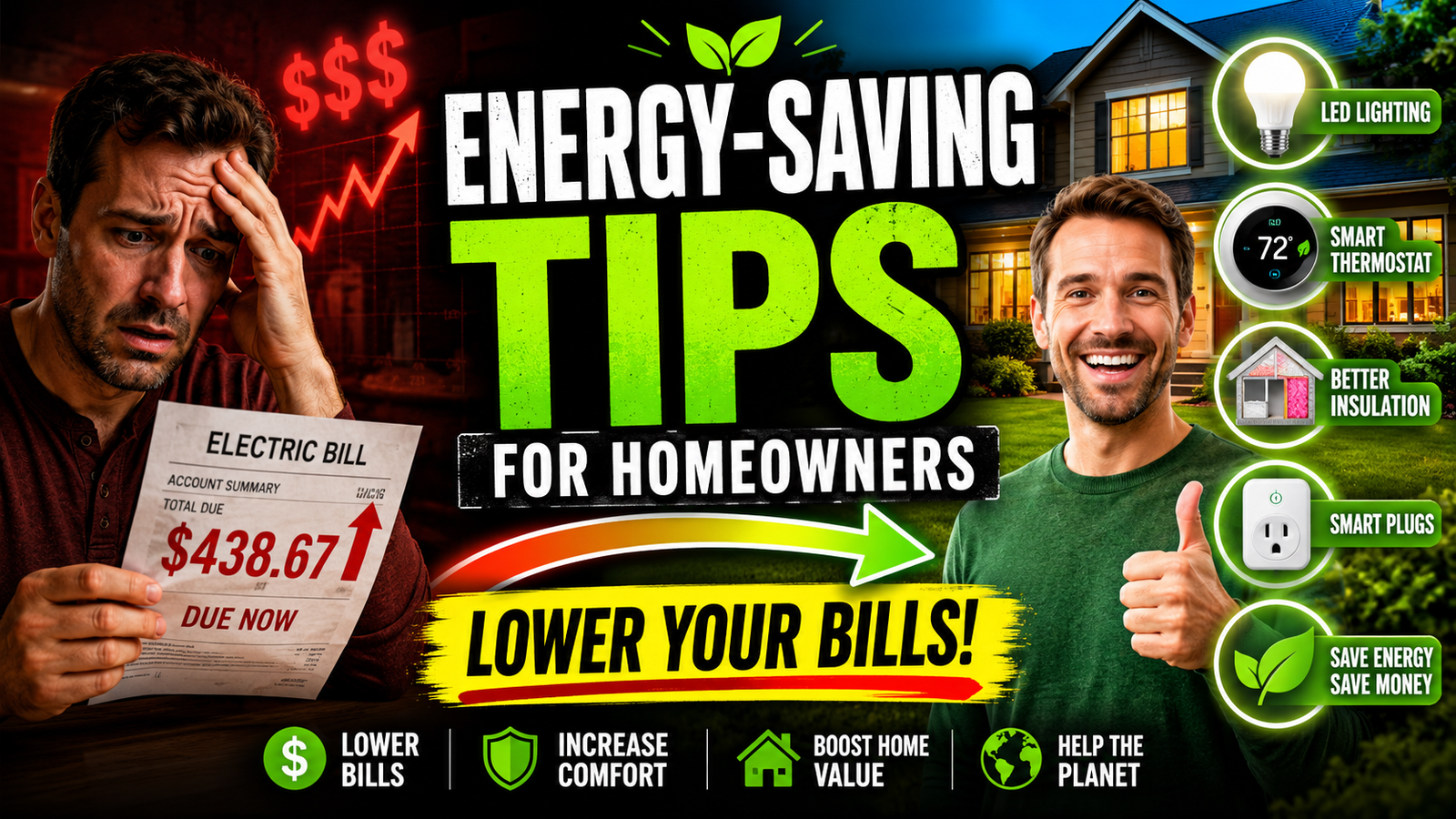
Homeownership comes with many expenses, and energy bills are one of the most important costs to control. Whether you live in a small house or a large family home, using energy wisely can help reduce waste and improve comfort.
Energy savings do not always require major renovations. Some of the best results come from small daily habits combined with smart home improvements.
1. Focus on Heating and Cooling First
Heating and cooling often consume more energy than any other home system. The U.S. Department of Energy says home heating typically makes up about 29% of a utility bill, making it one of the biggest opportunities for savings.
To reduce heating and cooling costs:
- Replace dirty air filters
- Seal air leaks
- Use curtains or blinds to control heat
- Avoid extreme thermostat settings
- Schedule yearly HVAC maintenance
- Use ceiling fans wisely
Even a small improvement in heating and cooling efficiency can make your home more comfortable.
2. Use a Smart Thermostat
A smart thermostat can help control energy use automatically. It can adjust heating and cooling based on your schedule, occupancy, and preferences.
ENERGY STAR says homes with high heating and cooling bills, especially homes that are empty for much of the day, may save around $100 per year with an ENERGY STAR certified smart thermostat.
This does not mean every household will save the same amount, but it can be a useful tool for many homeowners.
3. Seal Doors and Windows
Air leaks can waste energy. If warm or cool air escapes from your home, your HVAC system has to work harder.
Check around:
- Doors
- Windows
- Attic openings
- Basement areas
- Electrical outlets on exterior walls
- Ductwork
Weatherstripping and caulking are low-cost improvements that can help reduce drafts.
4. Upgrade to Efficient Appliances
Old appliances may use more energy than modern efficient models. If you are replacing a refrigerator, washing machine, dishwasher, or air conditioner, compare energy-efficiency ratings before buying.
ENERGY STAR certified products meet strict energy-efficiency specifications set by the U.S. EPA and can help save energy and money.
You do not need to replace everything at once. Start with the appliances that consume the most energy or are already near the end of their lifespan.
5. Reduce Standby Power
Many electronics use electricity even when they appear to be off. This can include televisions, chargers, printers, computers, and entertainment systems.
Use smart plugs or power strips to turn off devices when they are not needed.
6. Use Natural Light
Open curtains during the day to reduce the need for artificial lighting. In cooler seasons, sunlight can also help warm your home naturally.
In hot weather, close blinds during the hottest hours to reduce heat gain and lower cooling demand.
7. Be Careful With Online Energy-Saving Claims
Homeowners often see online offers promising dramatic electricity savings. Some are legitimate, but others may be exaggerated.
Before buying a digital energy guide, compare reviews and understand exactly what is included. Our full Energy Revolution System scam or legit review explains the product, possible pros and cons, and what homeowners should check before purchasing.
Final Thoughts
The best energy-saving strategy is realistic and safe. Start by improving heating and cooling efficiency, sealing leaks, upgrading lighting, reducing standby power, and maintaining appliances.
Home energy savings are not about one magic solution. They come from combining smart habits with practical improvements over time.
Related Energy-Saving Articles
- Learn practical methods in our guide on how to reduce your electric bill at home .
- Discover simple energy-saving tips for homeowners that can help reduce monthly utility costs.
- New to alternative energy? Read our beginner guide to DIY home energy systems before starting.
- Compare solar panels vs DIY energy guides to understand which option may fit your home better.
- Protect yourself by learning how to avoid electricity-saving scams online .