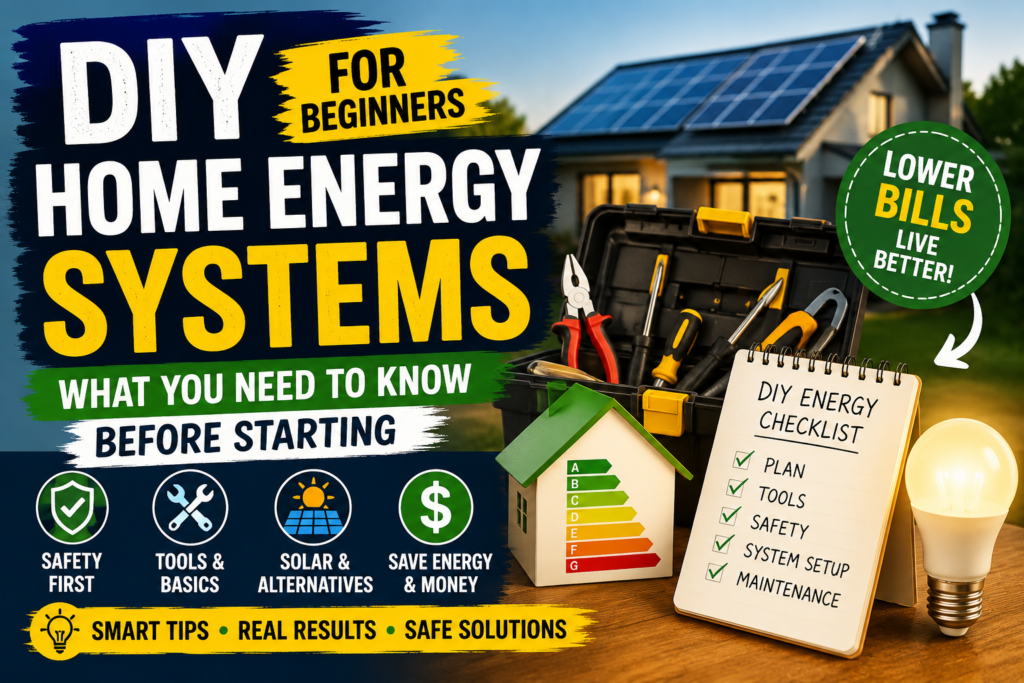
DIY home energy systems are becoming more popular as people look for ways to reduce electricity bills, prepare for outages, and learn about alternative energy. From small solar kits to battery backup systems and energy-saving guides, the idea of producing or saving power at home is attractive.
However, beginners must be careful. Home energy projects can involve electricity, batteries, wiring, permits, and safety risks. Before starting, it is important to understand the difference between simple energy-saving actions and technical electrical projects.
What Is a DIY Home Energy System?
A DIY home energy system can refer to several things:
- A small solar panel kit
- A battery backup system
- An inverter setup
- A portable power station
- A home energy monitor
- A digital guide about reducing energy use
- A homemade electricity project
Some options are simple and safe for beginners. Others require electrical knowledge and professional help.
Start With Energy Efficiency First
Before building or buying any energy system, reduce your energy waste. This is often cheaper and safer than immediately investing in equipment.
Simple steps include:
- Switching to LED bulbs
- Using smart plugs
- Sealing air leaks
- Adjusting thermostat settings
- Improving insulation
- Cleaning HVAC filters
- Unplugging unused devices
The Department of Energy provides an Energy Saver Guide that explains how homeowners can save energy and money through practical improvements.
Understand Safety Risks
Electricity can be dangerous. A poorly designed DIY system may create risks such as electric shock, fire, battery overheating, or equipment damage.
Be especially careful with:
- Batteries
- Inverters
- Generators
- Electrical panels
- Homemade devices
- Grid-connected systems
- High-voltage components
If a project connects to your home wiring, you should consult a qualified electrician. In many locations, electrical work requires permits or inspections.
Know the Difference Between a Guide and a Device
Many beginners confuse digital energy guides with physical energy devices. A guide may teach concepts or provide instructions, but it is not the same as buying a certified generator, solar panel system, or battery unit.
This distinction matters because a digital product cannot guarantee results for every home. Your savings depend on your energy use, local electricity rates, climate, equipment, and how safely the instructions are applied.
Before trying any DIY energy guide, read a review first. Our detailed Energy Revolution System reviews and complaints article explains what this product appears to offer and what buyers should know before purchasing.
Check Local Rules and Permits
Some DIY energy systems may be legal in one area but restricted in another. Solar installations, battery systems, and generator connections may require approval.
Before starting, check:
- Local building codes
- Electrical permit requirements
- Utility company rules
- Homeowners association rules
- Insurance requirements
Skipping this step can create legal, safety, and insurance problems.
Start Small
Beginners should avoid jumping into complex electrical projects. Start with safer improvements first:
- Energy monitoring plugs
- LED lighting
- Smart thermostats
- Weatherstripping
- Portable power stations
- Small solar chargers for phones or lights
These projects can help you learn without taking unnecessary risks.
Compare Costs Carefully
DIY does not always mean cheap. Some systems require tools, materials, batteries, replacement parts, and professional inspections.
Before spending money, calculate:
- Initial cost
- Extra materials
- Installation cost
- Maintenance
- Safety equipment
- Expected savings
- Refund policy if buying a guide
Avoid products that promise unlimited free electricity without explaining limitations.
Final Thoughts
DIY home energy systems can be educational and useful, but beginners should move carefully. Start with energy efficiency, learn basic safety, check regulations, and avoid risky electrical work without professional guidance.
A smart approach is to reduce energy waste first, then explore alternative systems with realistic expectations.
Related Energy-Saving Articles
- Learn practical methods in our guide on how to reduce your electric bill at home .
- Discover simple energy-saving tips for homeowners that can help reduce monthly utility costs.
- New to alternative energy? Read our beginner guide to DIY home energy systems before starting.
- Compare solar panels vs DIY energy guides to understand which option may fit your home better.
- Protect yourself by learning how to avoid electricity-saving scams online .